Aquatic Habitat Restoration
Fish Habitat Enhancement in South Carolina’s Lakes and Reservoirs
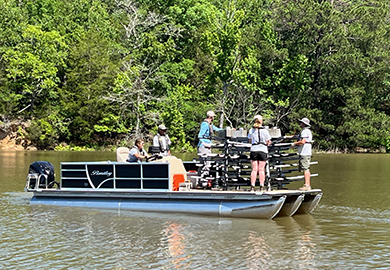
Complex and abundant aquatic habitat is critical to maintaining healthy and abundant fish populations. In reservoirs, that habitat is provided by woody debris, vegetation and rough substrates (e.g., sand, gravel and rock) which provide fish vital places to feed, shelter, reproduce and grow.
Unfortunately, the trees, stumps, and shrubs that were present when the reservoirs were flooded over 75 years ago are decomposing, reducing available habitat. Over time, reservoirs also accumulate sediment from their incoming tributaries decreasing water depth and covering sand and rock substrates with silt. This loss of habitat is exacerbated by shoreline development that converts naturally vegetated shorelines to lawns reducing the recruitment of new wood into the reservoir and increasing sedimentation from runnoff. In response to this loss of aquatic habitat the SCDNR has habitat restoration projects in several South Carolina reservoirs.
The SCDNR Freshwater Fisheries Section collaborates with conservation partners and reservoir owners to enhance this critical fish habitat.
These science-based efforts are designed to improve aquatic habitat quality, support sustainable fisheries, and expand public access to worldclass freshwater fishing opportunities throughout South Carolina.
Common species that benefit from habitat enhancement and restoration
Key initiatives include:
- the planting of native aquatic vegetation
- enhancing and monitoring littoral and pelagic fish habitat
- deployment and maintenance of fish attractors
- installation of spawning substrates
- shoreline stabilization
Other wildlife interactions:
- Several turtle species
- Non-venomus watersnakes
- Great Blue Herons
- Other water birds
Commonly used habitat enhancement structures
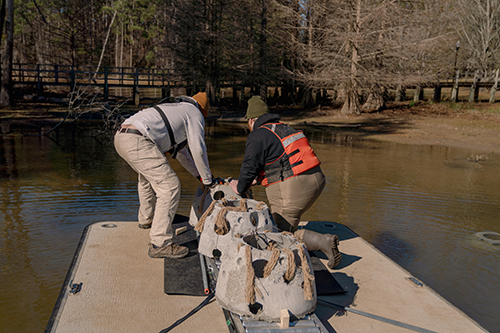
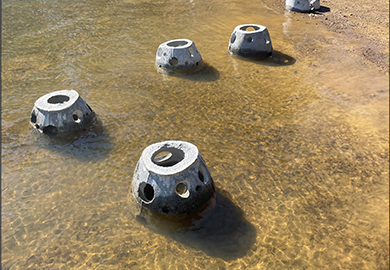
Reef balls and other concrete structures
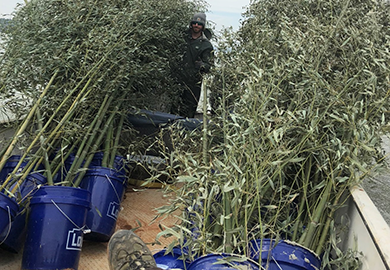
Bamboo brush piles (“crappie condos”)
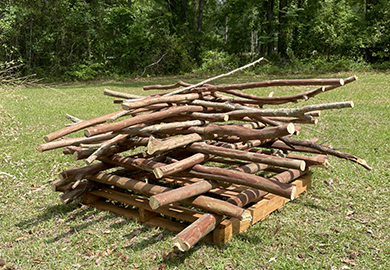
Wooden structures
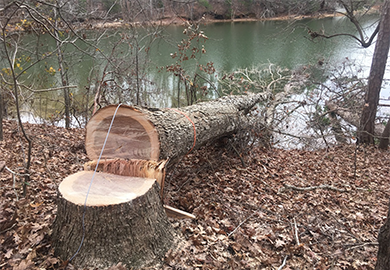
Felled trees
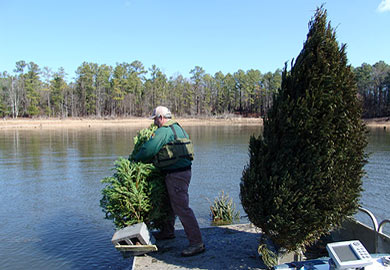
Recycled Christmas trees
Structures made out of PVC, including Mossback units